
“OK” Delivery Operations May be a Liability: Here’s Why Leading Food Distributors Are Moving On
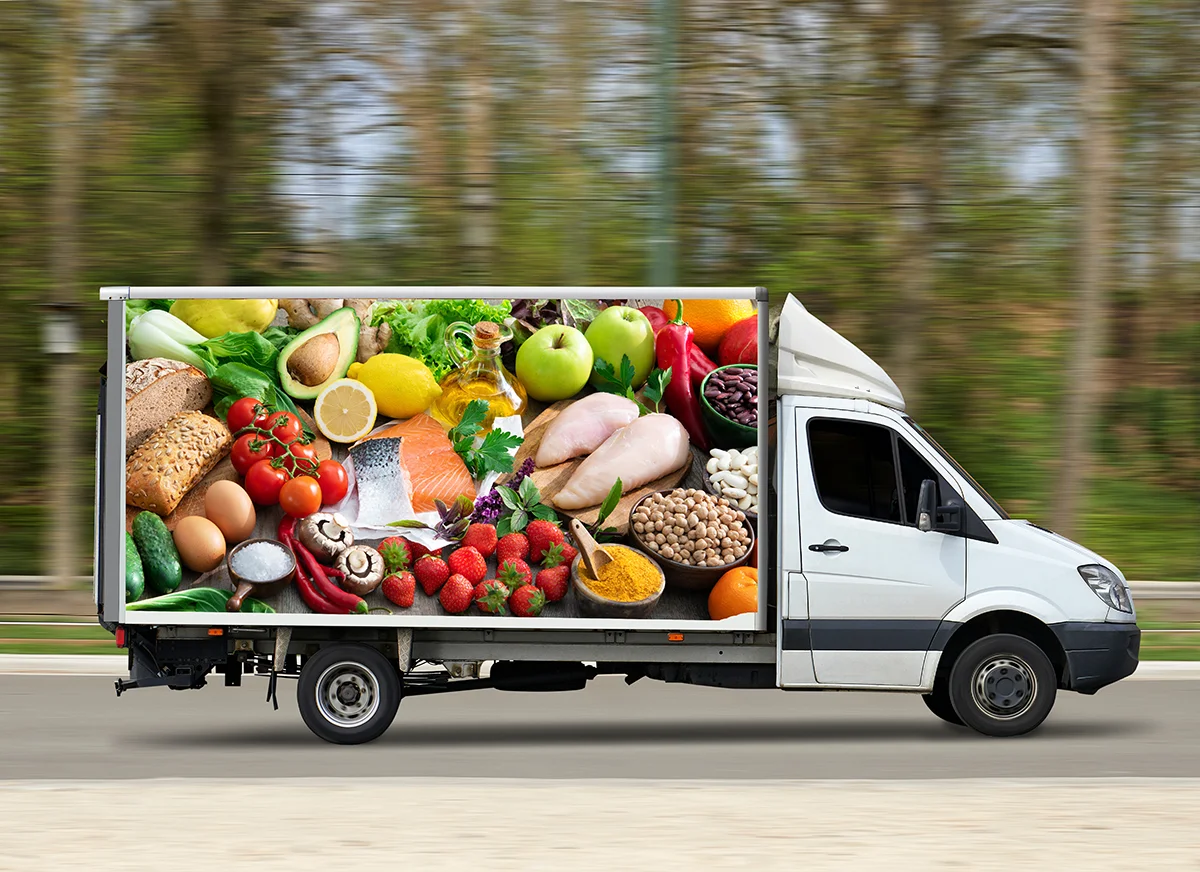
In food distribution, being “OK” could be mistaken for success.
Routes are planned. Vehicles leave the depot. Deliveries get completed. On the surface, everything appears under control.
But this is exactly where weaknesses are exposed, not because they are failing outright, but because they are just about coping. Coping is not the same as performing and it’s an assumption that can be costly.
OK is not OK.
The real test of a delivery operation is how it responds when conditions change, volumes increase, orders shift, time windows tighten, fuel costs increase and the pressure builds.
That’s when “OK” systems start to show their limits.
Solutions for Food & Drink Distribution
The Breaking Point: When “OK” Stops Being Enough
Most delivery operations grow and evolve over time. Processes are created, tools are added in, and planners develop workarounds that keep things moving. On the face of it there feels a sense of control.
However, underneath, so many of these operations are built on fragile foundations.
They rely on static plans in a dynamic environment. They rely on a planner’s experience rather than the intelligence of the system and they assume that tomorrow will look like, and be similar, to today.
Food delivery is anything but average:
- Order volumes can spike unpredictably
- Product mixes shift daily (frozen, chilled, ambient)
- Delivery windows tighten
- Customers expect precision, not approximation
Under normal conditions, your operation might cope but when demand spikes, such as during seasonal peaks, large orders, or supplier disruptions, your delivery performance starts to fail, meaning that:
- Routes become inefficient
- Capacity is misused/under used
- Drivers fall behind schedule
- Costs quietly escalate
What makes this particularly risky is that the impact happens over time and issues aren’t always visible immediately. They show up as:
- Gradual margin erosion
- Increased fuel spend
- Overtime costs
- Lost productivity
This is the true cost of “OK”: it hides inefficiency until it becomes too expensive to ignore.
Put the ‘WOW’ into your deliveries
What High-Performance Delivery Operations Do Differently
Operations that go beyond "OK" not only enhance their planning but also radically alter decision-making. Instead of relying on static assumptions, they build flexibility, visibility, and control into every part of the delivery process.
Descartes’ route optimisation software is built around five core capabilities that enable this shift and transform delivery performance from reactive to being controlled.
1. Route Optimisation Before the Day Begins
For most food delivery operations, the delivery day is largely shaped the day before. Orders are taken, routes are built, and the plan is prepared before vehicles leave the depot.
The advantage of Descartes’ route optimisation is that this planning process does not have to be static. As new orders are taken, the system continually recalculates and refines routes, helping planners build the most efficient delivery schedule before execution begins.
Crucially, Descartes delivery scheduling solution can also look beyond a single delivery day. Where delivery commitments allow, orders can be pulled forward or pushed back by a day or two, within agreed limits, to create denser, more efficient routes, which helps eliminate unnecessary mileage, improve vehicle utilisation, and make each delivery more cost-effective.
This is especially valuable for foodservice distributors serving the hospitality sector (e.g., cafés, restaurants, pubs, and hotels), where some customers have priority requirements. Larger or higher-value customers may need fixed delivery times, and these can be built into the plan. Smaller or more time flexible deliveries can then be intelligently scheduled around those anchor commitments.
The result is a route plan that protects customer service levels while still improving delivery density and operational efficiency. Instead of compounding delays and manual firefighting, the system manages disruption and recalculates the best possible outcome.
2. Capacity Visibility and Forward Planning
Many delivery issues often begin in the planning stage rather than on the road. The lack of a clear picture of available capacity is one of the most frequent reasons for food distribution inefficiencies. Without it, planners are forced to make decisions based on incomplete information and planning becomes reactive, often resulting in:
- Too many deliveries crammed into peak days
- Underutilised vehicles on quieter days
- Last-minute scheduling decisions
Descartes provides clear, forward-looking visibility into capacity and demand, which allows you to better plan days or weeks in advance with confidence, balance workloads across your fleet and avoid overloading your drivers and vehicles.
Visibility enables a more controlled approach to scheduling. Over time, this shifts the operation from reactive planning to structured, predictable performance and allows businesses to make smarter commercial decisions, such as aligning order intake and delivery commitments with what the operation can realistically deliver.
More importantly, it provides more strategic control over fleet operations and not just visibility after the fact.
3. Delivery Slot Management That Works in Practice
Offering delivery slots is often treated as a customer-facing feature, but operationally it is one of the most complex commitments a fleet can make.
Many operations overpromise because they lack the intelligence to align slots with real capacity, which often results in three possible outcomes:
- Missed delivery windows
- Frustrated customers
- Expensive re-deliveries
Descartes connects delivery slot management directly with route optimisation and capacity, resulting in slots that are only offered when they are achievable, delivery commitments therefore become realistic rather than optimistic and fleet performance will improve without costs increasing. This reduces failed deliveries, improves on-time performance, and strengthens trust with foodservice customers.
4. Driver Execution Tools That Close the Gap
Descartes ensures that what’s planned is reliably executed through the use of:
- Real-time tracking
- Accurate ETA updates
- Driver and customer communication tools
- Proof of delivery (POD)
Digital POD plays an important role in frozen and chilled distribution. It provides verified evidence that goods were delivered as expected, helps resolve disputes quickly, and creates a clear audit trail for compliance and service level agreements, while resulting in improvements between planning and execution. For operations teams, this provides immediate visibility into performance and delivery exceptions. For drivers, it reduces uncertainty and improves productivity. The result is a delivery operation where planning and execution are aligned.
5. Cost Reduction Built Into Every Decision
Cost pressure is a constant issue in food distribution, but many operations approach it reactively and cut resources rather than improving efficiency.
Descartes addresses the problem by improving how efficiently drivers and vehicles are used, embedding cost reduction directly into how routes are planned and executed. Doing so helps to reduce fuel costs and labour costs with fewer miles driven and better route efficiency, while fleet costs are improved due to improved utilisation of vehicles. While increasing delivery density and eliminating unnecessary mileage ensures that every route contributes to increased profitability.
6. Built for the Complexity of Food Distribution
Temperature-controlled food delivery adds another layer of complexity. Vehicles aren’t just uniform spaces; they’re often multi-compartment environments of variable sizes that must accommodate frozen, chilled and ambient zones for food storage while in transit.
Descartes allows operators to model and manage these compartments with precision, including the ability to adjust compartment volumes as demand changes.
Having this kind of flexibility ensures load planning is more accurate and only based on available capacity, vehicle space is better utilised and there is improved flexibility across all the routes.
Discover how: Rethinking Foodservice delivery – from cost centre to growth engine
7. The Cost of Doing Nothing
Keeping the current system may be riskier than changing it. Sticking with existing systems is a natural desire, particularly when they seem to be functioning "OK." In logistics, however, that safety can often be an illusion.
As costs rise and customer expectations increase, the gap between “OK” and a high-performance business widens. What once felt acceptable can become inefficient, and inefficiency becomes expensive.
Operations that continue to rely on static tools and reactive processes often find themselves under increasing pressure. It is because they failed suddenly, but because they failed to evolve.
Discover more about choosing the right planning solution.
Final Thought: Raise the Standard
If your operation only performs well when conditions are predictable and struggles during peak periods, relying on manual adjustments to get by and lacking visibility into available capacity, then delivery windows will be missed when under pressure, showing that the system is not optimised and is operating on borrowed time.
OK is not OK anymore.
Food distributors can create delivery operations that are resilient, effective, and enhance customer satisfaction by using Descartes route optimisation solutions, which enable them to go beyond reactive delivery models and "OK" performance. Food distribution should be about more than just moving goods; it should also be about maintaining compliance, safeguarding quality, and empowering your clients to do business with assurance.
Contact us using the below form to discover how we can optimise your fleet for maximum productivity and efficiency.
Contact us
All fields marked with * are mandatory.
Gary Rosier-Taylor
VP EMEA Fleet Sales
I lead a team of sales professionals who help customers across multiple industries optimise their fleet operations.
Posted: 09/06/2026 | Category: Last Mile Delivery
