
Search Menu

Fleet Data Intelligence

Improve route efficiency and customer experience with planning that learns from everyday operational data.

Let's Talk
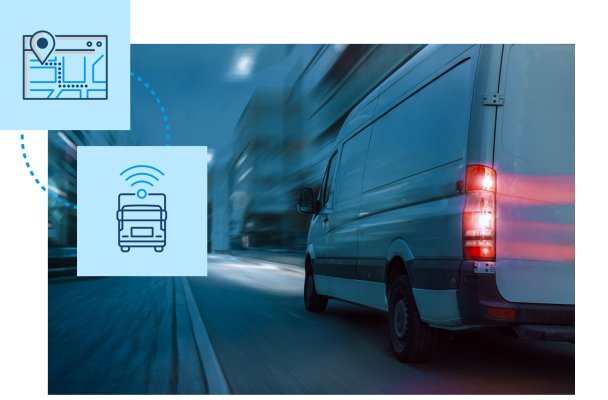
Delivery van on UK road with overlay illustrating AI route planning

Continuously improve delivery performance

Learn from real execution for more accurate route planning. 

  • Build achievable routes that get the most out of your vehicles 
  • Improve customer experience with dynamic and realistic ETAs 
  • Increase route density with machine-learned service times 

Route planner uses agentic AI on desktop computer

Make data-driven decisions

AI agents help planners make faster, better-informed decisions. 

  • Highlight trends based on historical delivery data 
  • Troubleshoot problems using natural language questions 
  • Discover insights and recommendations  

Hype versus business value 

In this episode of The AI Exchange, we explore how AI is transforming last-mile delivery by moving beyond static service time assumptions.

Learn how AI-driven insights and real-time communication improve route accuracy, increase route density, and support more consistent on-time, in-full performance.

Discover how continuous learning from actual delivery behavior helps fleets optimise planning and execution over time. 

AI that solves real logistics problems
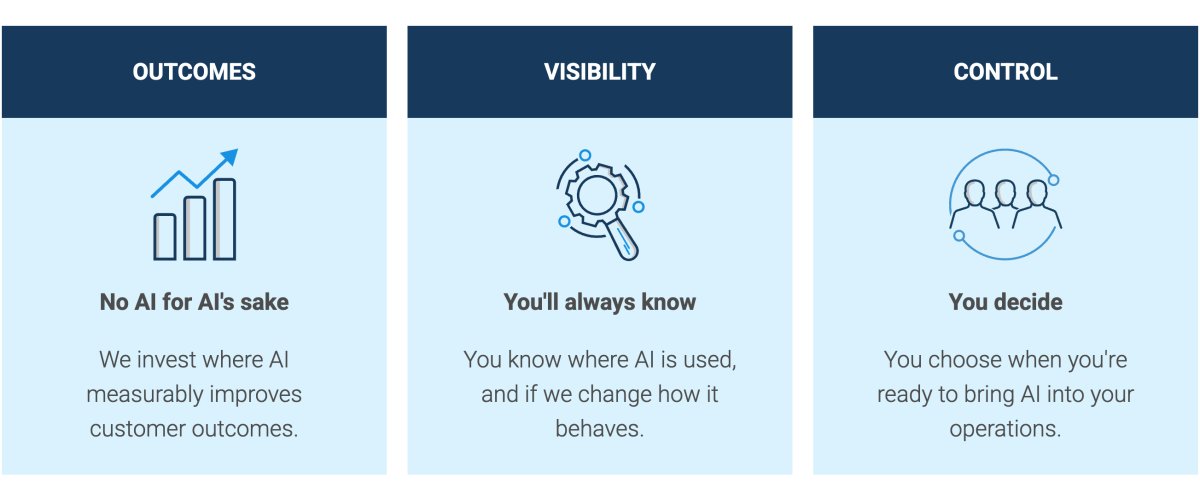
Diagram of AI route planning principles: Focus on outcomes, visibility and control

Get in touch to find out how AI could drive measurable outcomes for your business.


AI Route Optimisation FAQ 

  • What is AI route optimisation?

    AI route optimisation embeds artificial intelligence and machine learning capabilities to improve delivery planning using historical and real-world execution data. For example, machine learning can analyse previous deliveries to improve service-time estimates, delivery locations and estimated arrival times. 

  • How does AI improve delivery route planning?

    AI can help make the assumptions behind a route more accurate. Machine learning can identify how variables including customer type, product characteristics, delivery volumes and vehicles affect service time. More realistic service times allow planners to reduce unnecessary buffer time, make better use of vehicle capacity and create more achievable delivery schedules. 

  • Can AI route optimisation reduce delivery costs?

    AI improves the information on which route optimisation decisions are made. More accurate planning can help vehicles and drivers complete more stops while maintaining achievable schedules. Descartes reports that early deployments of its machine-learned service times have increased route density by up to 30%. 

  • How does machine learning improve delivery service times?

    Machine learning analyses actual delivery performance to understand how variables such as customer type, delivery volume, product characteristics and vehicle type affect the amount of time required at a stop. That information can then improve estimates used in future route plans. 

  • Is AI replacing delivery planners?

    No. Descartes uses AI to give planners better information and faster ways to investigate fleet performance. Planners remain in control of operational decisions and how AI is introduced into their processes. 

  • What types of AI are used in route optimisation?

    Machine learning can support service-time learning, route optimisation, delivery -location accuracy and ETA predictions. Generative AI can help surface planning insights through natural -language questions. Agentic AI can observe information, develop recommendations and support action with human oversight. 


Cut delivery costs with real-time insights and continuous improvement

1794563856