
Big and Bulky Retail: Best Practices for Profitable Last-Mile Delivery
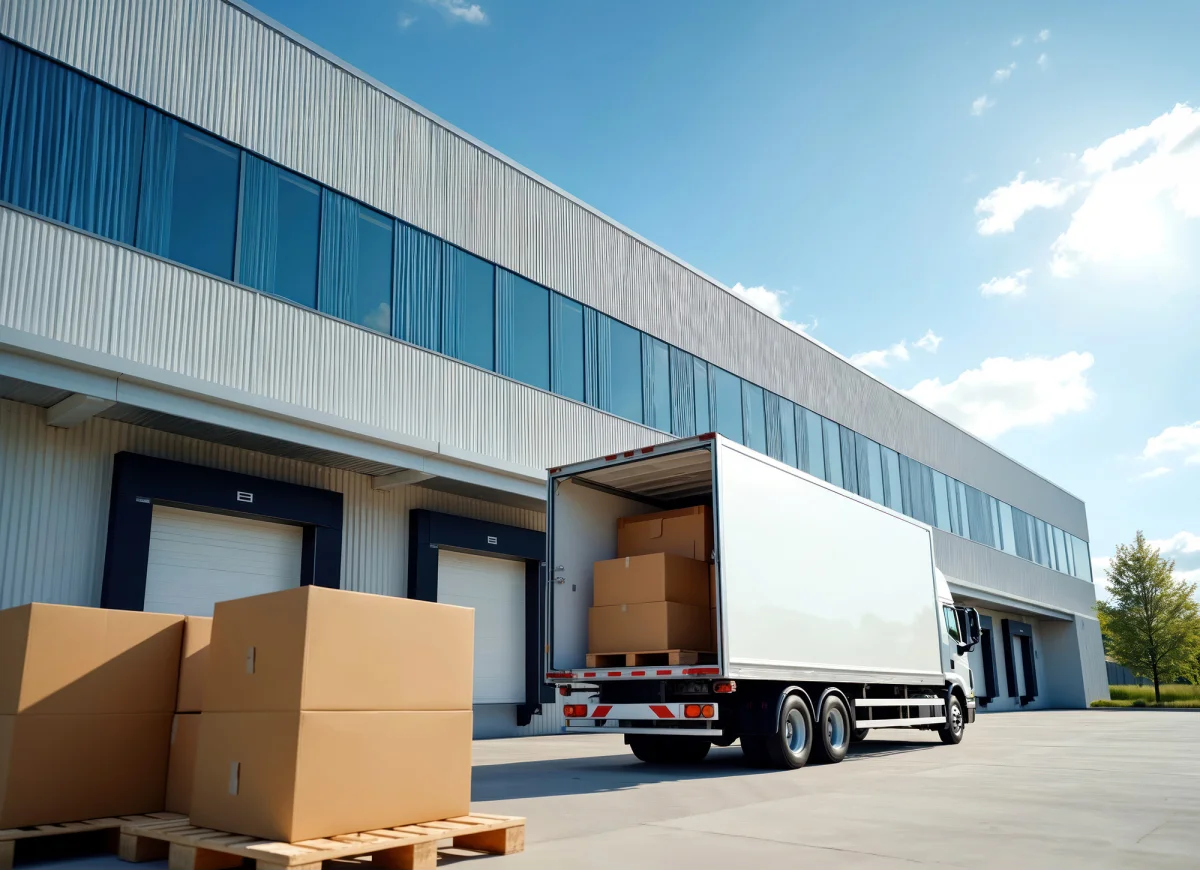
The Big and Bulky Delivery Challenge
Big and bulky last-mile delivery is a category apart. Whether you're shipping a fridge freezer, a sectional sofa, or a treadmill, the constraints are fundamentally different from those of parcel delivery.
What makes big and bulky planning so difficult? There are several factors at play:
- Differing product types and seasonality: For instance, summer garden furniture may reach volume limits before breaching weight limits. In contrast, Black Friday appliances often “weight out” first.
- Varied service types: Doorstep drop-off, room-of-choice, white-glove installation and packaging removal all require different service times and crew skillsets.
- Strict customer delivery windows: Unattended delivery generally isn’t an option, so customers expect named-day delivery and a narrow time slot (typically one to four hours).
- Frequency and access constraints: Narrow roads, weight-limited bridges, and buildings without lifts can render a route unviable before a vehicle leaves the hub.
- Third Party Logistics (3PL) dependency: Over-optimistic planning leaves capacity gaps, creating a reliance on 3PLs.
The result is labour-intensive planning, routes that overpromise, and a customer experience that falls short of expectations. These elements contribute to wasted miles, excess fuel consumption and shrinking margins.
This white paper sets out six practical ways to build feasible, profitable and customer-centric delivery routes at scale. Read the full white paper here, or download the PDF version for later.
In this white paper:

1. Plan the Network First
THE CHALLENGE
Many delivery operations rely on fixed depot boundaries and static postcode assignments set years ago. Over time, this leads to overlapping routes and avoidable bottlenecks. One depot struggles to absorb demand while nearby vehicles are underutilised. By rethinking the underlying network design, fleets can unlock existing capacity without adding new vehicles.
BEST PRACTICE
Before optimising individual routes, re-examine the network itself. Strategic planning software uses historical delivery data to find the optimal fleet size, vehicle mix, depot placement and customer service levels.
Typical areas for analysis include:
- Right-size the fleet: Pinpoint the optimal number of vehicles, where they are needed, and where excess capacity exists.
- Optimise fleet composition: For instance, evaluate the ratio of 3.5-tonne to 7.5-tonne vehicles across your network and how this affects route viability and cost per stop. Consider where you need EV capacity for urban environments.
- Model 3PL/LTL dependency: Identify the postcodes or service types where outsourcing is genuinely more efficient.
- Move beyond static territories: Use real delivery data to challenge fixed postcode assignments and identify crossover zones.
- Plan for peak before peak arrives: Proactively model capacity requirements for Black Friday and seasonal peaks.
- Optimise time windows: Simulate the operational impact of moving from two-hour to four-hour delivery slots, for example.

2. Look for New Revenue Opportunities
THE CHALLENGE
When margins are tight, it’s likely to focus efforts on cutting costs. But last-mile delivery can also generate revenue. Rather than asking "how do we do this and save money?", it’s worth asking "what additional value could we get from the same infrastructure?"
Value-added services like white-glove installation command premium pricing differentiation in a crowded market. Yet many operators leave these revenue streams untapped because their planning systems can’t reliably schedule the additional service time.
BEST PRACTICE
Reframe delivery optimisation as a source of profits. The right routing and scheduling platform enables you to offer, price, and reliably provide services that your competitors may not be able to match.
- Build value-added services into route planning: Ensure that route planning accounts for varied service times for handling, installation, assembly, and removal.
- Reduce cart abandonment: With dynamic scheduling, orders placed later in the day can be incorporated into the following day's plan, capturing sales that would otherwise be lost.
- Unlock same-day and next-day capability: Dynamic planning makes expedited delivery commercially viable rather than a costly exception.
- Monetise premium delivery slots: Where customers aren’t able to compromise on a particular time window, dynamic pricing can offset the cost of inefficient delivery slots.

3. Schedule Based on Reality
THE CHALLENGE
Retailers are under pressure to provide narrow, customer-selected delivery slots at the point of sale. In the latest report commissioned by Descartes, 39% of consumers prioritised convenience and precision over speed when it comes to furniture and appliances.
The problem is that most retailers estimate their delivery capacity and delivery time slots based on historical averages. Fixed slots are offered to customers at checkout without taking into account existing commitments and available capacity, including cube, weight, distance, time, and driver skillset.
This approach ignores the variability of big and bulky delivery. Delivering a set of light rattan garden furniture is faster than delivering a washing machine to a high-rise apartment. Equally, a simple drop off requires less time than an installation. As a result, planners don't know whether time windows are achievable until batch planning takes place a day or two in advance of delivery.
This three-step process—determining slots, making appointments, then batch planning—leads to one of two outcomes:
- Over-optimistic scheduling: There is insufficient capacity to carry out deliveries within the promised time slots. The retailer has to take costly measures such as rescheduling or assigning the job to a third-party logistics provider (3PL). What’s worse, customer trust is eroded.
- Over-conservative scheduling: The retailer underutilises vehicles and drivers, making delivery routes unnecessarily costly. Then there’s a potential loss of revenue from the missed opportunity to make more deliveries.
With batch planning, you’re making a delivery promise to customers before you know the cost and feasibility of the route. This approach undermines profitability and puts customer retention at risk.
BEST PRACTICE
The key is to handle appointment scheduling and route optimisation simultaneously. Smart scheduling software generates slots dynamically based on the current route plan, true capacity, time, distance, and order characteristics. Routes are optimised continuously as orders come in.
This allows you to show customers the most feasible, profitable, and environmentally friendly delivery slots. Retailers can also highlight cost-effective slots, or price slots dynamically, offering premium delivery options to customers who want them.
Customer-centric delivery
John Lewis + Partners set a goal that scheduling a delivery had to be easy, fast, and flexible. It also had to be profitable for the business.
To this end, the retailer lets customers choose the delivery slot at the point of sale. There are no delays between placing an order and scheduling the delivery.
“The advanced optimisation capabilities and architecture of the Descartes solutions were critical, bringing new delivery service options to our customers in an economically feasible way.”
Systems Manager
John Lewis + Partners
Scheduling services
Wren Kitchens is UK-based luxury kitchen retailer. Before building a kitchen, Wren sends a surveyor to measure the customer’s space.
The retailer is using dynamic scheduling to optimise routes. With the solution, surveyors have been able to complete 56% more visits.
“This enables us to increase the number of appointments per day in an area, which not only lowers mileage and fuel consumption but also drives down the cost per appointment. Working with Descartes, we’ve saved 13% on annual fuel costs.”
Transport Director
Wren Kitchens
4. Adapt Daily
THE CHALLENGE
Big and bulky delivery planning can be time-consuming. Planners may spend hours attempting to balance vehicle capacities, delivery time windows and crew requirements. Because routes take so long to create, order cut-off times must be well in advance, limiting the ability to offer same or next-day delivery. Even then, there’s no guarantee that routes will be executable: the shortest route on paper may overlook time windows, access restrictions and variable service times.
BEST PRACTICE
Consider automating daily planning with software that balances multiple business objectives and operational constraints simultaneously.
Advanced route optimisation solutions work in the background as new orders arrive. This allows retailers to extend order cutoff times and support faster fulfilment. The optimised route plan acts as a stable base that only needs minor manual adjustments.
- Automate route optimisation: Build routes that are operationally useable by factoring in delivery constraints such as time window, service type and vehicle characteristics.
- Account for changing priorities: Planning should reflect today's priorities, not yesterday's defaults. That could mean minimising mileage, maximising customer service, or managing costs.
- Plan dynamically as orders arrive: As orders are added, the route plan should update automatically based on real available capacity.
- Provide a real-time view of capacity: Empower planners and dispatchers with visibility into shipments, vehicles and routes. Highlight when time windows are at risk.
Routes that Handle Real-World Complexity
ArrowXL is a two-person delivery provider handling items such as white goods, appliances and furniture. The business had struggled with a planning system that didn't produce operationally usable results.
ArrowXL selected Descartes’ cloud-based route optimisation solution to build achievable, cost-effective routes. The solution allows ArrowXL’s planning team to respond dynamically as orders enter the system, making better use of vehicles and delivery crews.
This has resulted in:
- 13% reduction in miles driven
- 5.6% reduction in average miles per route
- Route terminations reduced from around 6% to approximately 1%

5. Communicate End to End
THE CHALLENGE
The stakes are high for big and bulky deliveries. If the customer isn’t home, the crew can’t leave the item. That means a re-delivery, potentially absorbing the full cost of a two-person crew or additional 3PL charges.
Customers themselves demand the full transparency they’ve come to expect from online marketplaces. Waiting around all day isn’t an option: they want accurate, precise ETAs, and they want to know when plans change.
THE SOLUTION
- Cover the basics: Send a reminder SMS on booking, when the timeslot is confirmed and on the day of delivery.
- Operational transparency: Offer real-time tracking and progress updates to minimise uncertainty.
- Real-time communication workflows: Keep customers informed when the delivery status or the ETA changes.
- Browser-based tracking: Don’t force customers to download a cumbersome app.
- Real-time feedback: Collect feedback instantly to identify issues before they become complaints.
- Digital proof of delivery: Photographic evidence protects your business from fraudulent claims for missing items or damage to property.
6. Learn from Real Behaviour
THE CHALLENGE
A persistent source of planning error in big and bulky delivery is inaccurate service times. Many systems assume a fixed 15 minutes when the reality varies drastically between a simple drop-off and a complex installation.
Over time, these inaccuracies compound. Planners lose trust in the system and start padding service times manually. This creates routes that are systematically under-loaded, inflating cost per delivery and reducing the number of stops that can be completed in a day.
BEST PRACTICE
By replacing static service-time assumptions with machine-learned predictions, retailers can recover hidden capacity, improve delivery reliability and increase the productivity of each route.
- Capture actual service times at stop level: Mobile technology can record arrival, start-of-service, and departure times for every stop.
- Segment by service type and address characteristics: A ground-floor appliance delivery is not the same as a fourth-floor installation in a building without a lift.
- Feed real data back into planning parameters: Refine service time assumptions regularly, improving ETA accuracy and route feasibility over time.
Conclusion
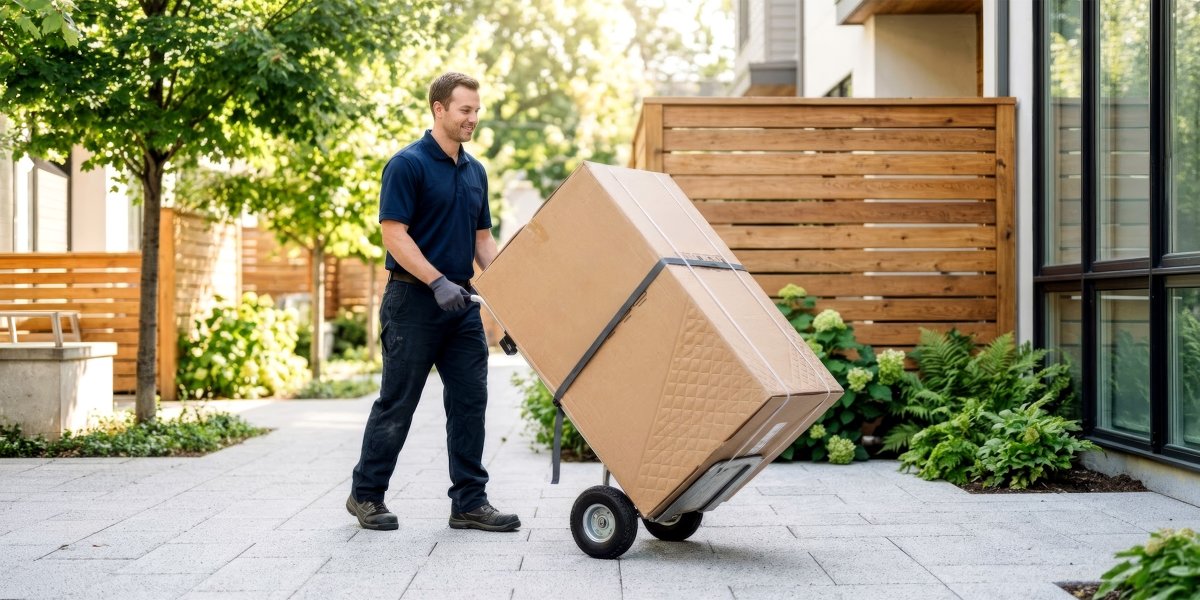
Big and bulky last-mile delivery is one of the most operationally complex challenges in logistics. The same constraints that make it difficult also make it an arena where operational excellence can create a genuine commercial advantage.
Retailers and transporters who can offer precise, reliable delivery windows at the point of sale, who can build profitable routes that reflect real capacity, and who can adapt dynamically when plans change, will win business that their competitors cannot serve.
The six best practices in this paper have been applied by leading retailers and delivery providers to reduce costs, improve customer experience, and unlock revenue that their existing operations were leaving on the table.
Smart appointment scheduling represents the most significant single opportunity for big and bulky deliveries. By combining appointment scheduling and route optimisation in a single step, organisations can offer customers delivery windows that are genuinely feasible and profitable. This reduces reliance on expensive 3PLs, enables later order cut-off times, and turns delivery into a revenue opportunity.
Ready for profitable, customer-centric delivery?

Jeannie Amberg
Content Marketing Manager - Fleet Solutions
Jeannie brings a decade’s experience in Software as a Service, focusing on ecommerce and last-mile customer experience.
Posted: 25/11/2026 | Category: Last Mile Delivery
